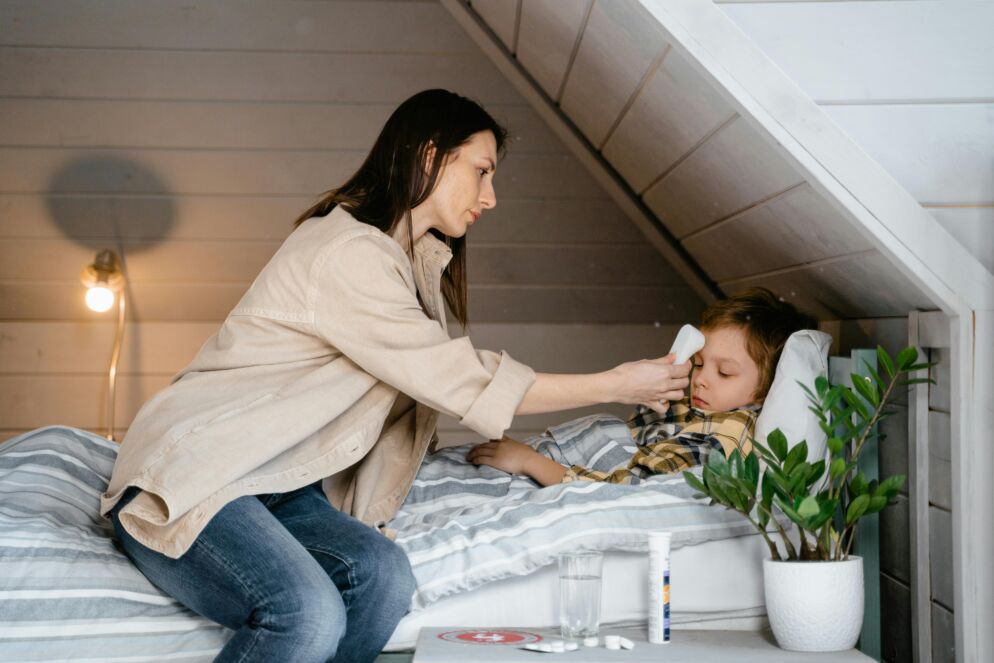
Coughs and colds are common during the fall and winter, but parents, especially of young children, will also want to be on the lookout for pneumonia. It can be easy to mistake for a regular cold, but it’s far more dangerous for those most at risk. Last year saw a surge in pneumonia cases in children ages 2 to 4, according to the Centers for Disease Control and Prevention. While infection rates have largely returned to normal in 2025, it’s still important to be well-educated about the disease. Dr. Theresa T. Nguyen, chair of pediatrics at GBMC HealthCare, shares the best ways for parents to identify and treat pneumonia.
This interview has been edited for length and clarity.
[Last year] was a particularly bad year for pneumonia outbreaks. How have things changed this year and why?
Last year, we were seeing high rates of mycoplasma pneumonia, or “walking pneumonia.” It doesn’t always come with fevers, so parents may mistake it for a cold, but it’ll last for more than two weeks. Last year was the first “normal” respiratory season that we’ve had since the COVID pandemic, and during the pandemic, we had very low rates of pneumonia because everyone was masking and social distancing. But since things went back to “normal,” many kids who grew up during the pandemic did not have a barrier against viruses or bacteria.
Right now [in early October], though, we haven’t been seeing a lot of pneumonia or RSV (respiratory syncytial virus). People have had a year for their bodies to build up that protection again.

How can parents tell the difference between pneumonia and the common cold?
The common cold is caused by viruses and is usually not accompanied by a fever. If you have a fever and a cold, it usually won’t last for more than five days. Pneumonia can start as a cold or virus, but if the virus doesn’t clear up, it can lead to bacterial overgrowth that causes pneumonia. If your child has a fever for longer than five days or a cough for longer than two weeks, it could be a cold that has developed into bacterial pneumonia. Kids with pneumonia will also often have very low energy and appetites.
How can parents spot walking pneumonia if it doesn’t have many of the telltale pneumonia symptoms?
That’s the million-dollar question. If your child has a coughing illness that is lasting for longer than two weeks or is progressively getting worse, that’s when you want to go to a doctor so they can do an exam. They may do a chest x-ray, but I want to remind everyone that findings on chest x-rays are behind clinical findings, so they may not always be necessary. With mycoplasma pneumonia specifically, you’re going to want to look for respiratory distress and shortness of breath.
Pneumonia is most common in children ages 2 and younger. Why do you think that is?
Kids under 2 don’t have as much immunity to viruses, and their lung capacity is much smaller because their body is much smaller than older children’s and adults’. They’re more likely to be overwhelmed by mucus secretion and inflammation. It’s common in the elderly for a similar reason, because their immunity is not as good as younger people’s.
Toddlers also haven’t had as much exposure to bacteria and viruses as older children have, so they haven’t had the chance to build up an immunity to diseases.
Has the COVID pandemic changed how we approach infectious diseases like pneumonia?
At the beginning of the pandemic, coughs were much more worrisome for people. It could have been a cold or pneumonia, but it could have been COVID. While it’s still around, COVID is a lot less worrisome than it was at the beginning of the pandemic. An important difference is that repeated COVID cases can have long-term effects, but getting colds or pneumonia will not increase your chances of getting them in the future or lead to chronic illness.
For colds, we advise comfort care rather than treatment. There’s a lot of cough and cold medicines out there, but I want to make it clear that many of them are a waste of money. There are some benefits to cold medicine, but it can be very expensive and often does not alleviate congestion or runny nose. For pneumonia, you should definitely take your child to the doctor, but the emergency room is not necessary unless your child is struggling to breathe.