Since Fransis Gunn created the first summer camp out of a military exercise at the dawn of the Civil War in 1861, summer camps have been a staple of American culture.
Fueled both by Victorian attitudes about nature’s physical benefits along with concerns about the urban evils of the tenement slums in the city, summer camps started to take off in the 1880s. The YMCA (1874), Boys Club (1900), 4-H Club (1902) and Boy and Girl Scouts (1910-1912) opened camping programs, and they took off massively after World War I.
A Unique Experience
Piggybacking off the traditional summer camp model were family camps as camps extended their traditional seasons to allow parents to join in. The dawn of paid family leave and the expansion of car culture in the middle of the 20th century gave camps and religious organizations a new market.
At the same time, family camp experiences have historically been varied in format and rarer. Some of the sprawling variety of experiences included the Catskills family resorts shown in the 1987 film “Dirty Dancing”; the booming family camping experiences of the National Parks System; Western Dude Ranches and the YMCA’s family week extensions of its traditional offerings.
The Challenges
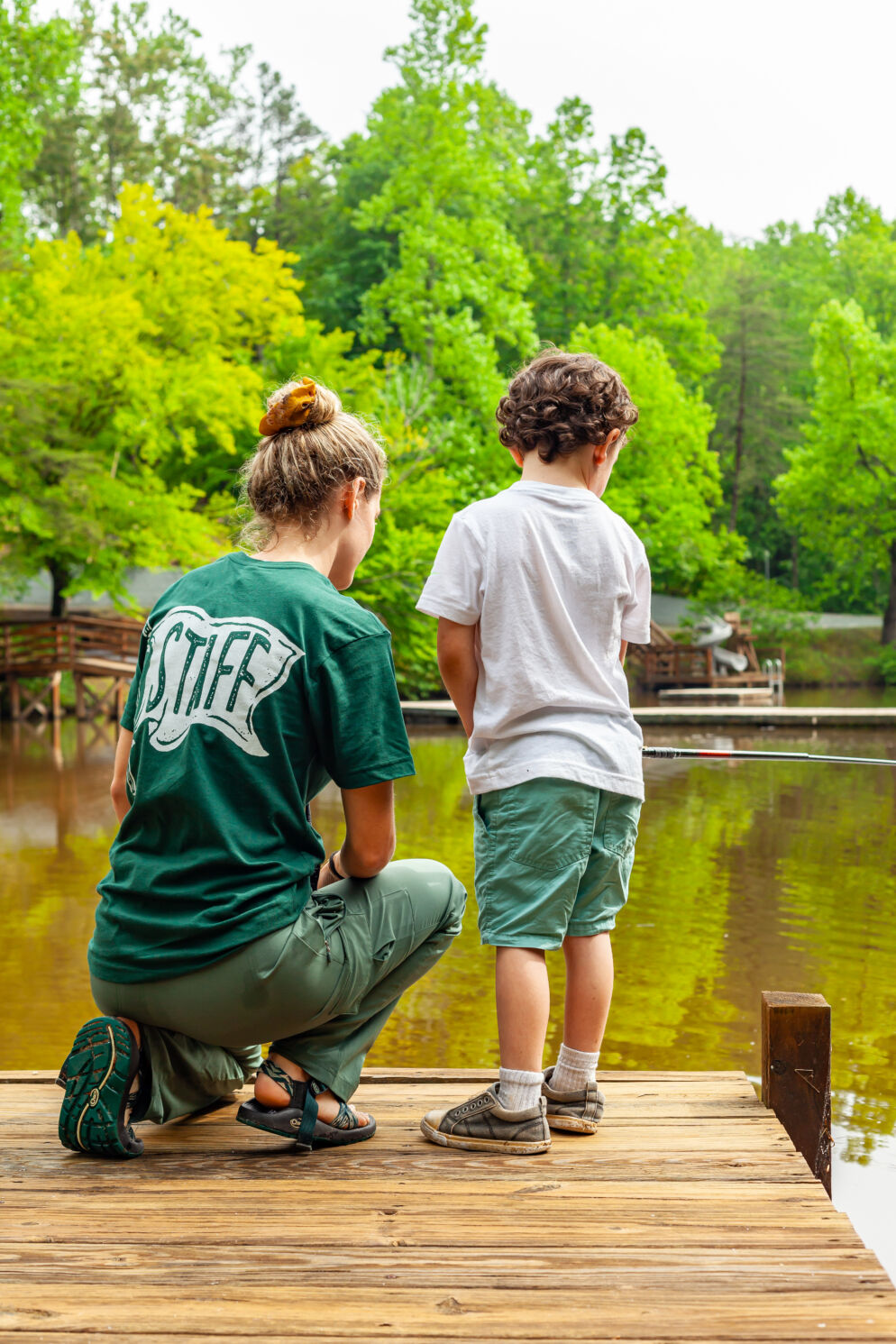
In the Mid-Atlantic today, there are a lot of variations in terms of what the camps offer and when they’re offered, but a connecting factor is that a lot of them are built around the same infrastructure challenges. For most camps, their bread and butter is youth, and to add a family weekend typically adds challenges with staffing and rooms.
Sandy Hill Camp & Retreat Center offered family camp directly after the pandemic in Summer 2021 as a way to keep things running in some capacity. But it wasn’t ideal with facilities that are traditionally 14 or 15 campers per bunk.
“The issue is availability, given the fact that we run a summer camp program outside of that and events that utilize and rent our space out pretty regularly,” says Casey O’Brien, a director of YMCA’s Camp Letts.
Over in the foothills of the Blue Ridge Mountains, Camp Friendship’s director and coordinator of retreats, Sarah Ackenbom, says it’s an issue of demand. Camp Friendship ran a popular family camp program, but the greater demand was for more kids’ camp weeks later in the summer. “Kids needed camp more than families, necessarily,” she says. “We can offer a weekend that could offer a wonderful experience for families, but families needed their kids to go to camp.”
The camp’s equestrian stables (its prime attraction) and facilities are open from April to November, so its family camp was moved to weekend retreats in the spring and fall.
Adapting the Model
As a result of availability, a number of camps either have to go all-in on the family camping end or squeeze in time when they can.
Examples of the former include Deer Valley YMCA Family Camp (Fort Hill, Pennsylvania) or Sandy Cove Ministries (North East, Maryland). Examples of the latter include Camp Letts (Edgewater, Maryland), holding a family camp on Labor Day Weekend; Camp Potomac Woods (Leesburg, Virginia), hosting family weekends; Camp Pecometh (Centreville, Maryland), hosting a friends and family camp for a weekend in July, in addition to Camp Friendship (Palmyra, Virginia).
For Pecometh, the camp has morphed into an alumni weekend of sorts. The 80-year-old camp boasts fourth generation alumni.
“We have a very invested alumni network, so it’s kind of a homecoming weekend in a sense. We don’t reach full capacity for this program. There’s not full desire out there for more than one weekend,” says Pecometh Executive Director Augie Lankford.
Camps generally are lenient over definitions of family and extended family. However, some religious-affiliated camps have rules regarding same-sex couples, and they also might be less welcoming places to people not of the faith.
Additionally, there’s another option. For the Boy or Girl Scouts, there are family camps like the Memorial Day Weekend session in Goshen (Goshen, Virginia), but campers generally arrive as scouting dens or troops, with parents as den or troop parents who share co-counseling duties. As a result, these serve as pseudo-family camps to an extent.
Why Choose a Family Camp?
Despite the challenges, however, for those who attend, family camps offer unique benefits, like family bonding and a chance for kids not comfortable being on their own yet to test-run camp alongside their parents, according to Southwest family camp CampWay, so they remain a time-honored part of the summer camp experience.