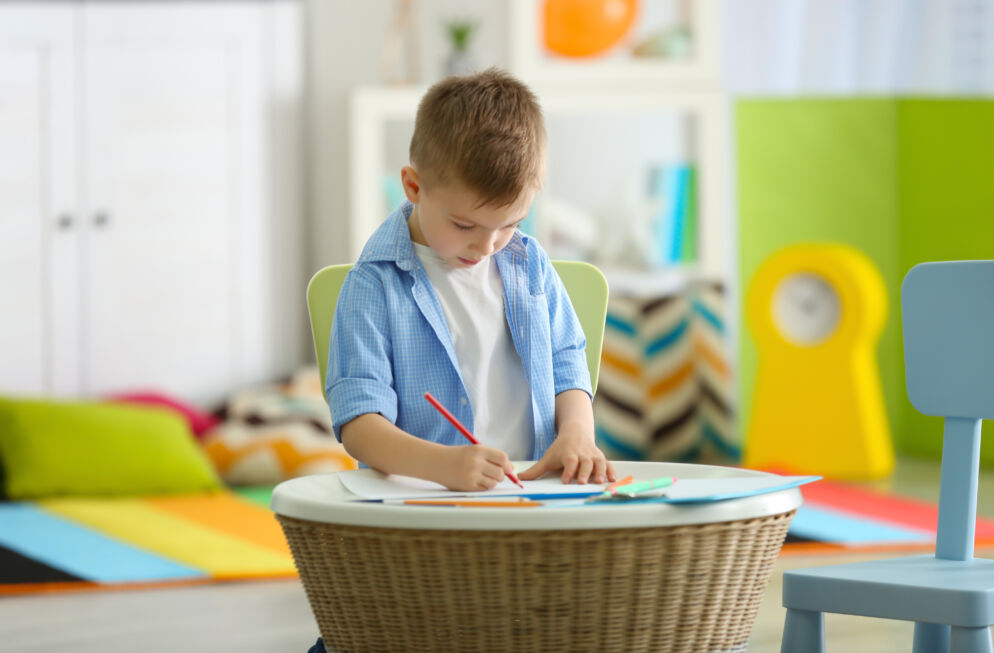
There are any number of reasons parents may consider therapy for their child. They may want strategies to cope with anxiety, depression or other mental health challenges. Perhaps there are issues around relationships or self-image. Or their child may have a disability, like an Autism Spectrum Disorder or ADHD, that often comes with a host of concerns.
Whatever the situation, know that effective therapeutic options are available, and they aren’t limited to traditional psychotherapy, often called talk therapy.
One alternative is art therapy, where children work with a qualified mental health professional to express themselves through a creative, hands-on process. While an obvious choice for children and teens with language limitations, art therapy can be an excellent modality for nearly anyone.
Treatment beyond words
Art is a universal language, and everyone is creative in their own way. Capable and credentialed art therapists know how to help even reluctant children or those with mobility or other restrictions find an inspiring spark. In fact, many children with ASDs or ADHD are visual learners with both strong affinity and potential for artistic expression.
Clinicians can utilize and build on these visual strengths. To start, they offer a wide variety of mediums, from paints, crayons and markers to modeling wire, food coloring and natural materials like leaves and twigs. Sessions could include clay, dominoes, LEGO pieces or something else entirely to match a client’s interests and abilities.
Art therapists know that the creative process requires a broad range of cognitive skills. Art therapy can help increase a child’s attention, concentration and problem-solving, which is especially valuable for those with disabilities. Furthermore, working individually with an art therapist or in a group with peers provides an opportunity for children of all abilities to practice social skills.
Working together in a supportive environment
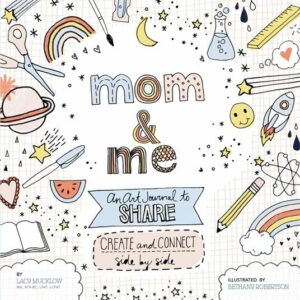
According to Lacy Mucklow, art therapist at The Counseling Renaissance in Sykesville, “art therapy is a wonderful way to safely approach therapy, especially if talk therapy is difficult. Working in visuals and metaphor allows for safe processing of things from feelings to trauma and provides distance to approach difficult topics.”
One of Mucklow’s clients called art therapy “secret therapy,” because she did not realize what they were doing together until the end of treatment.
What to expect during a session
Art therapy is versatile, so therapists work in many different settings, including educational, medical, rehabilitation, private practice and mental health programs. Sessions may be one-to-one, or for groups, couples or families. A standard weekly session runs 45 to 60 minutes but could be longer in some cases.
During art therapy sessions, clients create works of art—often enthusiastically—but the art itself isn’t the objective, nor is improving artistic techniques. Rather, art therapists help children and teens of all abilities with skill-building and therapeutic goals, such as increasing self-understanding and self-expression, improving attention to task and problem-solving, working through challenging emotions and difficult situations and more.
For Peggy Kolodny, an art therapist in Owings Mills, assessment is an especially important part of the therapy process. By talking with clients and family members and observing the child’s art and play, Kolodny gets to know her clients and learns about their
familiarity and comfort with different art materials.
Kolodny may open (and close) individual sessions with a mindfulness activity, such as practicing breathing with a pinwheel, or rhythmic movement like dancing or bouncing on a yoga ball. She then selects a structured or unstructured activity, or even better, the child and therapist choose what to do together. Kolodny encourages curiosity in her clients and the use of “art as a natural vocabulary” to tell their stories, a process that can be both
rewarding and healing.

Collage is a favorite medium for Sharon Strouse, an art therapist in Cockeysville. According to Strouse, collage is easy and accessible, and over time, clients choose and assemble images and words that “need to be seen.” Although a good deal of the session is spent making art, talking about the process is also important. Strouse uses gentle observations and questions about “color, form, themes and placement” or even a client’s gesture or pose to encourage reflection and exploration. Strouse adds that art “opens the door
of possibility.”
Local talent, local training
The field of art therapy is growing as clients and their families discover its value and universities create or expand art therapy programs to train practitioners. While some higher education institutions, including Hood College in Frederick and McDaniel College in Westminster, offer undergraduate programs in art therapy, clinicians must have a master’s-level or higher degree.
Many Baltimore area art therapists were trained at George Washington University in Washington, D.C., or Drexel University in Philadelphia. Notre Dame of Maryland University recently launched an Art Therapy BA/MA program in Baltimore as well. Master’s-level students take advanced courses in counseling with an emphasis on art therapy as a unique therapeutic practice. There are also high-level art classes, including painting, ceramics, sculpture and photography.
Want to know more?
The American Art Therapy Association (arttherapy.org), as well as regional organizations, such as the Maryland Art Therapy Association (marylandarttherapy.org) and
the Potomac Art Therapy Association (potomacarttherapy.org), offer helpful resources including contact information for art therapists.
Art Therapy Collective | Owings Mills
psychologytoday.com/us/therapists/peggy-lee-kolodny-owings-mills-md/230525
Artful Grief – Cockeysville | artfulgrief.com
The Counseling Renaissance – Sykesville and Ellicott City
thecounselingrenaissance.com
What are the creative arts therapies?
Creative arts therapy is a licensed mental health field that uses creative processes to help clients achieve goals and improve their emotional, social, cognitive and physical functioning. Art therapy is an excellent example. Related professions include music, drama and dance/movement therapy.
According to the National Coalition of Creative Arts Therapies Associations (NCCATA), more than 15,000 Creative Arts Therapists are practicing in the United States and around the world. National Creative Arts Therapy Week (CATS Week) is celebrated annually during the third week in March in both the United States and Canada. However, it’s always a good time to learn more about these valuable interventions and potential career paths:
American Dance Therapy Association | adta.org
American Music Therapy Association | musictherapy.org
North American Drama Therapy Association | nadta.org
National Coalition of Creative Arts Therapies Association | nccata.org