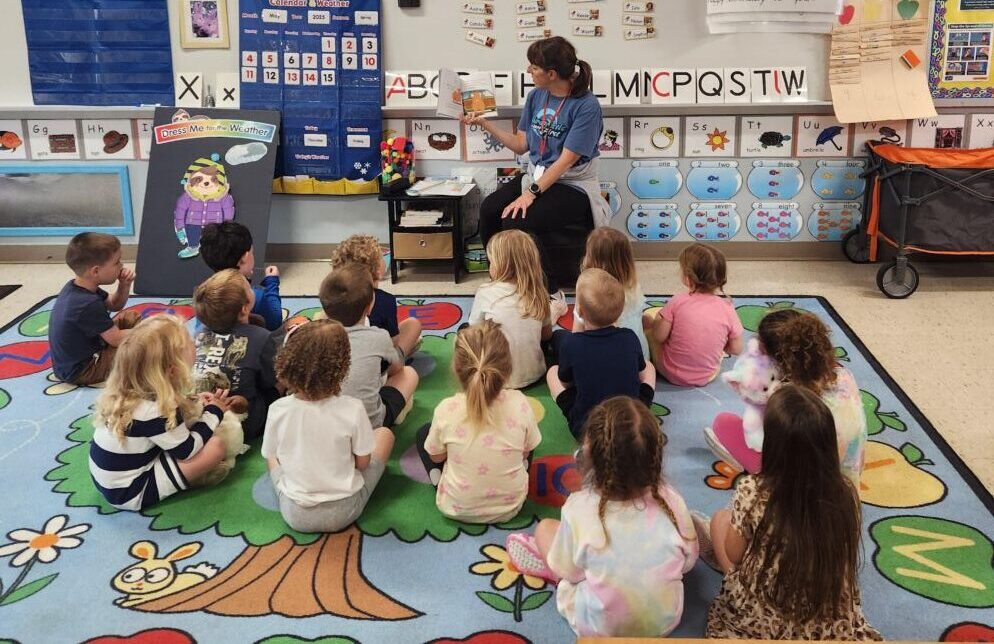
With the long, hot and humid summer days, it’s hard to believe that the new school year is just over the horizon. The unstructured days of pool visits, barbecues and beach vacations are drawing to an end. It’s time to begin preparing yourself and your children for the switch over to structure, schedules and schools.
While every school year and every child is different, there are a few things that you can do to help ease your child’s transition to make it a more successful start to the year. From schedules, to practicing new skills and pep talks, here are some things that a few local teachers recommend doing in the month of August as your kids get ready to hit the books.
Practice Makes Perfect
Kim Carter, a preschool teacher for more than 20 years, recommends working on practicing the skills your children will need to successfully move throughout their school days every day — especially for younger children who may be attending school for the first time. It’s important to practice independent skills such as “putting on and taking off your coat, opening your lunchbox, being able to fill your water bottle, [being] able to use the bathroom independently with minimal assistance,” she says.
Howard County elementary school teacher Brittany Seldon Goldberg agrees. “I encourage parents to let their kids practice doing things independently. … These little life skills really help build that confidence aspect and then helps them be successful in school, because a lot of those skills transfer into the school building.”
Both Carter and Goldberg believe that being consistent is key. Start practicing those skill sets now and encourage your children to try each day to complete those tasks independently or with minimal assistance from a grown-up.
Reestablish Routine
Another important component of preparing for the new school year is getting back into a consistent routine every day. Carter suggests setting a regular bedtime and wake-up time before the start of the new school year to help with the transition to busy school days. Parents should “reestablish routines such as gradually moving bedtime earlier, practicing a morning routine, establish a consistent meal time…” and it’s also important to limit screentime before bed, she says.
Setting up regular routines not only helps older students get ready for the structure of a school day, but it helps new students know what to expect in the mornings before school. For students who seem nervous, Carter recommends doing a dry run prior to the first day. “Do a drive by,” she says. Explain to your children how the morning will work. Talk them through how drop-off at school will work. She recommends also visiting the school grounds so your child is familiar with their new surroundings on that first day. “Maybe even visit the playground,” she says. For children who take the school bus, Carter recommends going through your planned morning routine and taking them to their school bus stop so your little one can know what to expect.
Lizz Miller, who is a mother of two and director of St. Michael Preschool in Mt. Airy, advocates practicing morning routines in part to establish familiarity and to reduce surprises. “Try to make [mornings] the exact same every day. Don’t have variations in the morning, because that’s when kids get nervous because [it] isn’t the same as it was yesterday,” she says. She also recommends letting the parent set the tone. “As much as we love our kids and want them to be independent, don’t let them dictate the morning.” She says setting up the morning routine a few weeks in advance will allow you to find out what where your child might need extra time to get ready so you aren’t rushed.
Preparing to Succeed
Miller says one important component of getting children who are starting school for the first time ready is working to find a balance between preparing them and overwhelming them. “When you’re 3 or 4, you don’t really know what [school] means. You don’t really understand that means your mommy or daddy is going to drop you off and leave, so you want to have those conversations [and say], ‘When you go to school, you’re going to be with some other adults that love you and want to take care of you, and they’re there to help,’” Miller says.
Goldberg, who has nearly a decade of experience in education, including as a para-educator, substitute and teacher for second grade and kindergarten, recommends getting older siblings involved when possible. “If a child is nervous about going to school, really play on the fact that, ‘Well, you get to ride the bus with your big brother,’… just really playing on your family dynamic to help support the kids as best as possible.”
For first-time students especially, Miller says the adjustment can take some time. “The first couple of weeks … we’re inevitably going to have tons of kids crying, tons of kids trying to learn this transition.” Miller urges patience for parents. Since many of these children have never spent a full day away from both parents, it can take time for many kids to feel comfortable and safe in this new environment. To help their young scholars adjust to school, Miller encourages parents to try to stay calm at drop off. “Kids play off your emotions,” she says. “You need to model the fact that you are confident in this choice.”
Katie Schubert loves an early bedtime and a solid morning routine. Her daughter, who does not enjoy those things, starts kindergarten later this month.