*Note: This Q&A originally ran for last year’s fair. Some events have been changed/are different for 2025’s Maryland State Fair. For updates on the newest offerings at the fair, read our “What’s Moo in the Maryland State Fair”.
The Maryland State Fair is here, and with the chance to enjoy the last days of summer.
Fairgoers are greeted with the sight and sounds of rides, activities, and fair games along with smells of foods such as cotton candy, barbecue, funnel cakes in the air.
As we prepare for the last weekend of the fair, learn more about what’s behind the fair’s agricultural education offerings from experts Amanda Brown Clougherty and Kelly Garvick:
Can you tell us more about yourselves?
Clougherty: I grew up in Maryland 4-H and have participated in the Maryland State Fair since I was 8 years old. I live on my family farm in Talbot County, Maryland. We till 500 acres of primarily grain and hay with a small cow-calf beef herd as well as a pumpkin and vegetable stand in the fall. My degrees come from the University of Maryland in College Park, and I currently work for the UMD College of Agriculture and Natural Resources as the assistant director of external relations and alumni affairs.
I have a passion for educating consumers about farming and agriculture production. Approximately 20 years ago, I had the fortune of leading the efforts to establish the agriculture education area called “U-Learn Farm” at the Maryland State Fair.
Garvick: I was raised on a small farm in southern Carroll County and began in the Carroll County 4-H program at the age of 7, then exhibiting at the Maryland State Fair by the age 10. Through my years in the 4-H, FFA and junior livestock associations, I was able to exhibit livestock (beef, sheep and swine), expressive arts, environmental sciences, agriculture sciences, 4-H livestock judging, demonstrations and public speaking at county, state and national venues.
I married into a family farm and settled in northern Carroll County where I gained experience in grain, green bean, beef and swine production. In addition, we operated a retail/wholesale/private processing butcher shop.
My husband and I raised two boys, both of whom also were members in 4-H, FFA, Maryland Junior Angus Association and the Maryland Junior Hereford Association. The highlight of our showing season was/still continues to be the opportunity to exhibit at the Maryland State Fair.
Currently, I am a special education teacher for Carroll County Public Schools where I teach at Carroll County Career and Technology Center. This coming school year (2024-25) will mark 30 years working in special education for CCPS. I have been fortunate to teach at the Gateway School, North Carroll Middle School, Manchester Valley High School and CCCTC. I have had the opportunity to be a department chair and sit on principal’s advisory committees, school improvement teams, discipline committees, multicultural committees and a variety of sub-committees in my years as a teacher.
I have an undergraduate degree in elementary education and special education. I am a Maryland Certified Special Education Teacher for birth through adult with two master equivalencies, one in curriculum and instruction and one in general studies. In addition, I am currently [completing] a master’s degree in education administration.
For those who may not know, can you tell us about agriculture?
Clougherty: Agriculture is the backbone of our society. Agriculture is responsible for the food on our plates, the clothing we wear, houses we live in and fuels our cars. This all done while striving to maintain a healthy environment and clean waters, because without a healthy environment, we can’t have healthy farms to provide for our everyday needs.
Many probably don’t know that Maryland’s largest economic contributor and industry is agriculture. The largest sectors are poultry, equine and nursery and landscaping. This is the foundation for why the “U-learn Farm” is so critical at the state fair because it connects fair goers with where their food, fiber and shelter come from in Maryland.
Garvick: Maryland has extremely diverse agriculture commodities and is able to produce a wide variety of agriculture commodities. Agriculture in Maryland is a major industry that employs over 350,000 people and adds over $8 billion to the economy yearly. Currently, Maryland has 1.9 million acres of farm land and 96% of that farmland is family-owned. Maryland agriculture produces crops, which include corn, soybeans, wheat, barley, sweet corn, watermelon, fruits and vegetables, [and] livestock in Maryland: poultry, beef, pork, dairy, racing and pleasure horses. Nursery, landscaping and greenhouse businesses make-up a large part of the agriculture industry.
The poultry industry is one of the largest commodities from the production of poultry products and eggs. Maryland farmers are proud to have over 300 farms that participate in tourism and recreational services. These farms are open to the public in the form of tours, pick-your-own, corn mazes and other agriculture adventures.
How does agriculture play a part in the fair?
Clougherty: Agriculture is a huge part of the fair! From an educational perspective, people can learn and explore about agriculture in many places:
1) U-Learn Farm: An interactive, hands-on area focused on four areas: Agriculture Technology, Soils & You, Commodity Corner and the AG Classroom.
- Agriculture Technology is a space to learn about the software systems, engineering, math and science behind growing our crops.
- Soils & You: Dirt is more than just dirt. Maryland soil is so diverse and complex. Here you can learn about what lives in soil and how important healthy soil is to our world.
- Commodity Corner: Here you will meet the farmers that grow different crops in Maryland, be able to virtually tour farms and make fun crafts associated with those crops. Examples: corn farmers, dairy farmers, produce farmers and more!
- Ag Classroom: Hosted by the Maryland Agriculture Education Foundation, the Maryland Ag Showcase will be open to explore as well as twice a day opportunities to sit down with a teacher for a short 10- to 15-minute lesson and activity.
2) University of Maryland Extension Master Gardeners have a demonstration garden and are there to answer questions about the plants and insects and teach how vegetables grow.
3) University of Maryland Dairy Showcase: Meet the University’s dairy cows, heifers and calves and learn all about dairy production and help name our newest calf on the farm.
4) Horseland is an entire area dedicated to teaching and showcasing our diverse equine industry in Maryland.
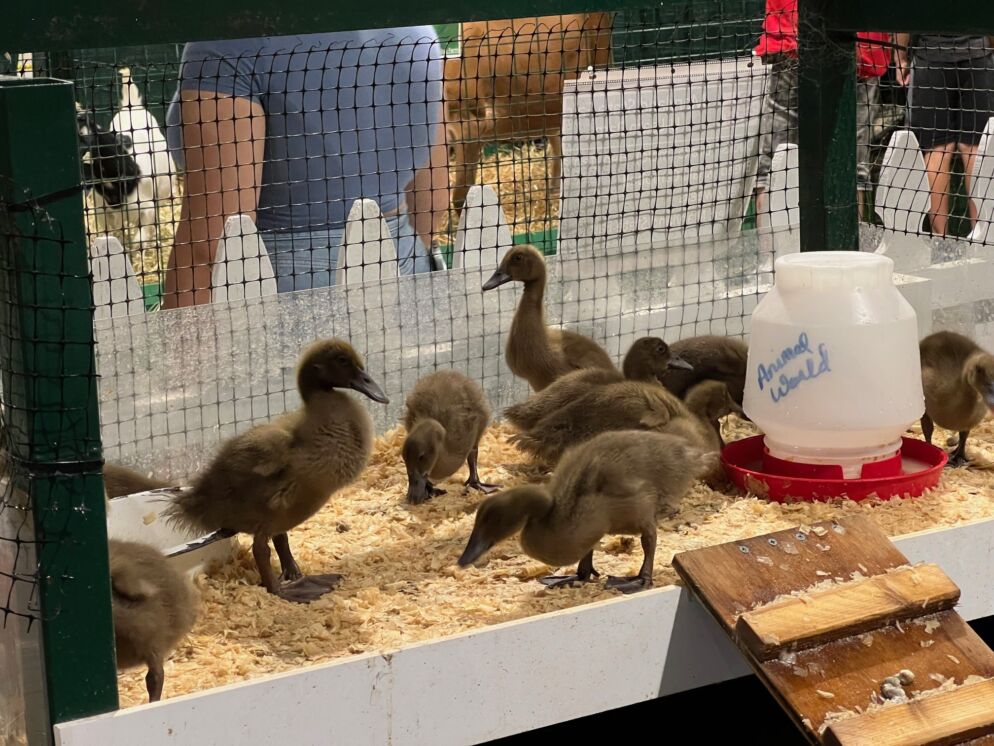
5) U-learn Barn: visit this area to meet fluffy, furry farm animal friends and learn about them and their roles on the farm.
6) Birthing Center: Have a firsthand experience watching baby chicks, piglets and dairy calves be born daily.
In addition, the cow palace, sheep and swine barn, horse arena, farm and garden building and indoor exhibit building will house animals, vegetables, fruits and more that are grown and shown by 4-H & FFA Youth and adult exhibitors for fair goers to experience more agriculture.
Garvick: Agriculture is the backbone of the Maryland State Fair. Youth and adult livestock, horse, llama/alpaca, poultry and rabbits/cavies … highlight the tremendous diversity in animals raised in Maryland. Additionally, vegetables, fruits, crops and a variety of agriculture commodities entered from all over Maryland are judged and on display in multiple areas during the fair.
But the highlight of Maryland agriculture can be found in the learning centers designed for fairgoers to explore the variety that is Maryland Ag. Spend time in Horseland (located directly behind Deggler rides), explore the U-learn Discovery Center and U-learn barn located in the Cow Palace. Saturday evenings at 7 p.m., young fairgoers can spend time participating in bedtime stories with animals. Participants will read to our animals in U-learn barn and the first 50 participants will receive a free book!
What is your favorite part of the Maryland State Fair?
Clougherty: My answer to this question has changed over the years. Currently, my two children are 4-H youth who exhibit and participate in many competitions and events, so it brings me joy to see them and the other youth exhibitors experience project achievements.
I also find much happiness witnessing fairgoers of all ages meet farm animals, touch grains or crops for the first time … witnessing the “ah-ha” moments and [making] connections between agriculture and their daily life.
Garvick: MSF Youth livestock shows hold a special place for me. I grew up showing livestock at the MSF and continued that tradition with my own children. I look forward to the day my grandchildren and great-grandchildren walk into the ring with their livestock. These shows offer Maryland youth the opportunity to exhibit their projects at the highest level and develop relationships that last a lifetime!
Will AGVenture be available at the Fair this year? Is it year-round or only for the fair?
Garvick: AgVenture is a virtual quest throughout the year located on our website to encourage continual ag education.
During the MSF, we offer live, hands-on, real-time opportunities for agriculture education! The Maryland State Fairs mission centers on agriculture education for all.
What’s new/offered at the Maryland State Fair this year? Any specific events and exhibits for young kids, tweens, and teens?
Clougherty: “U-Learn Farm” is experiencing a refresh this year. The area is expanded and will be re-organized for people to explore. Daily there will be an opportunity to meet farmers, participate in hands-on activities, make crafts and go through the soil maze. Go through the maze and answer challenges to find your way through!
New this year is our Ag Story Trail. Beginning and Ending in U-Learn Farm, families can follow the trail throughout the fairgrounds to read the story “Farm Boots.” This is a fun way to read together and explore the fair!
Garvick: University of Maryland Birthing Center offers one and all the opportunity to witness live births and newborn babies from a number of species. Spend minutes or hours watching and learning about those first moments during and after birth.
Get hands-on in our updated U-learn activity center. Talk to a local farmer or youth exhibitor, learn about planting, harvesting, honey making, dairy industry and so much more.
Become a jockey when visiting Horseland! Visit the many types and kinds of horses raised here in Maryland. Talk to a jockey or take an infield tour of our racetrack.
Maryland Department of Natural Resources (DNR) offers displays, exhibits and programs about our state’s forests, fish, waters and wildlife. Guests of all ages can talk with experts and enjoy fun, educational and informational exhibits about fishing, hunting, forestry, state parks, protecting our shorelines and natural resources and more.
Highlights this year will include activities about Maryland’s wildlife and pollinators, displays on Maryland’s forest products, a living shoreline tabletop demonstration, a kiosk with hands-on construction and engineering projects for kids, safety and recruitment information from the Maryland Natural Resources Police and, of course, visits by Smokey Bear.
Note: These attractions were new in 2024. To learn about what’s new in 2025, check out “What’s Moo at the Maryland State Fair?”