

A new rule, proposed by the Administration for Children and Families (ACF), aims to support keeping families together through kinship care.
ACF is a division of the U.S. Department of Health and Human Services (HHS), which reports the number of youth in foster care has been on the rise every year since 2012.
But the proposed rule would help reduce the number of children in foster care by making it easier to connect children with their “kin” — which HHS defines as including people who are related to the child by blood, marriage or adoption, or who have an emotionally significant relationship to the child, like godparents or close
family friends.
“When children are placed with relatives/kin, they can maintain a connection to their roots, which ultimately helps to build a positive self-image,” explains Pam Hoehler, director of placement services at Adoptions Together, in Catonsville. “When children know their roots, they feel a stronger sense of connection to their culture and community of origin and have a better sense of [self].”
The ACF rule would affect child welfare agency licensing standards, revising the definition of “foster family home” to reduce licensing delays.
The sooner licensing can be completed, the more time children get with people known to them or with loved ones. The rule was proposed (on Feb. 14)to help children stay closer with their families and combat the risks associated with living in the foster care system.
However, not everyone is optimistic about the proposed regulation. Past efforts to support kinship care have had mixed success.
“The system has never been worse, but it’s never been better,” says Rob Scheer, whose nonprofit supports foster families. “It’s the same thing they tried to do before, but we don’t have enough foster homes as is.”
Despite the positive change that would come from keeping children in homes with their kin, experts agree that we cannot ignore the fact that the foster care system is overburdened. It’s important to get to the root of the issue—the need for foster homes.
Foster Facts
Only 3% of foster youth go on to graduate from college (Annie E. Casey Foundation)
Adults who have been in foster care suffer PTSD at twice the rate of combat veterans
(Annie E. Casey Foundation)
Nearly a quarter of all foster youth who aged out of care were homeless after exiting the system (The Midwest Study)
Over half of all foster youth who aged out of care were incarcerated within two years (The Midwest Study)
An Overburdened System
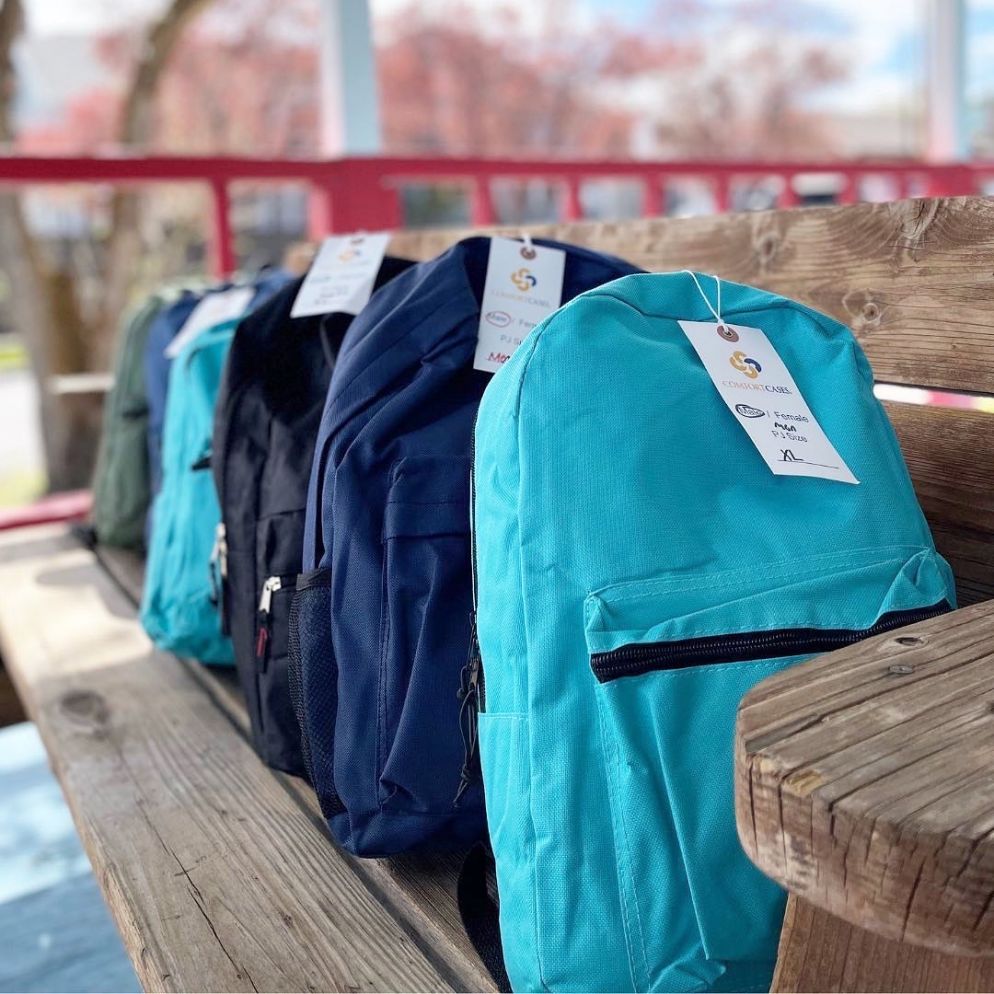
Scheer, who lives in Gaithersburg, Maryland, is the founder of Comfort Cases, an international nonprofit based in Rockville dedicated to bringing dignity and hope to young people experiencing foster care by providing backpacks filled with personal care and comfort items for the children.
Scheer has firsthand experience, both as a child who experienced foster care and as a parent. He adopted his children from foster care with his
husband, Reece.
“All five of my children arrived carrying the trash bag,” Scheer says, remembering his own trash bag from childhood. “It’s letting them know they don’t matter—that they’re disposable. These kids deserve more than a trash bag.”
On a recent trip to Kansas, Scheer says he saw three young girls sleeping in the foster care office because they had no placements. This situation is not unique, he says. It’s actually incredibly commonplace, and it happens all over the country.
Data collected by the HHS in 2016 showed Washington, D.C. had nearly 1,200 children in foster care. Virginia currently has more than 5,400 children in its foster care system, with more than 700 awaiting foster families, according to UMFS, a statewide nonprofit with a location in Alexandria. UMFS reports a 37% decrease of approved foster families statewide.
The Baltimore Sun reported in 2019 that nearly 1,700 children in Baltimore were in foster care. More recent data suggests many don’t have proper placements. An update from The Baltimore Banner last year confirmed some foster children were living in hotels or spending nights in a commercial office building downtown.
A sizeable portion of children in foster care were removed from their homes due to neglect, which Scheer says actually comes from poverty.
Neglect is the most common reason for children to enter the child welfare system, being responsible for entry in 76% of cases, according to the Anne E. Casey Foundation, a charity focused on improving the lives of young people at risk for poor educational, economic and social outcomes.
“Neglect is, in many cases, a lack of resources,” says Gail C. Christopher.
Christopher was one of 10 recipients for the 2023 Casey Excellence for Children Awards, for her lifetime of work over the last 40 years making efforts to improve the well-being of children. Christopher is known for her work infusing holistic health and diversity concepts into public programs and policy discussion.
Christopher is also the executive director of the National Collaborative for Health Equity, a D.C.-based national organization that promotes health equity by using data and developing leaders.
Recently, Christopher released her book “Rx Racial Healing,” which she says is a guide for facilitators to teach racial healing in colleges, groups,
institutions and communities.
As of 2019, HHS reported that of all the children in foster care, 23% of them were Black or African American. For comparison, Black or African American children make up 14% of the total child population of the United States.
According to Christopher, this disparity exists because of the historic belief in a false hierarchy of human value, which has “decimated families of color.”
Christopher says this is where data analysis comes in. By using data and statistics, she says, we can examine the disproportionate dissolution of families, helping to identify unconscious or implicit biases.
The issue of drugs like opiates being marketed disproportionately to low-income communities is one way this bias manifests, according to Christopher.
She also stresses the need for a living wage and affordable housing, because when parents are having to work three jobs to pay rent, there isn’t time for much else.
In August, nearly half a million Americans were working multiple full-time positions according to The U.S. Bureau of Labor Statistics.
Whether it’s changes that open up more avenues to children—such as the kinship rule—or addressing underlying causes for foster care, Christopher says more can be done.
“Children need and deserve love,” she says. “We as a society must find a way to show that love. In the foster care system and the policies we create.”
Foster Resources
Comfort Cases
Since Comfort Cases began its work, the nonprofit has distributed more than 200,000 backpacks filled with new items like pajamas, toothbrushes, lotions, books and stuffed animals.
Today, Scheer keeps a trash bag with him to remind himself where he came from and how far society has to go with how children are treated. Learn how to get involved locally at comfortcases.org.
One Simple Wish
One Simple Wish is a national nonprofit based in Trenton, New Jersey, that supports children in foster care by granting wishes, including requests for tangible items like bicycles, school supplies and experiences.
In 2021/2022, it helped grant 22,706 wishes, including 7,728 wishes for essential items and 2,796 wishes for education. Founder and foster mother Danielle Gletow hopes to grant 1 million wishes before 2024. onesimplewish.org
AFC Kinship Care
For additional information on the proposed change, contact Kathleen McHugh, director of the policy division of the Children’s Bureau, at 202-401-5789 or at cbcomments@acf.hhs.gov.
Find updates on the proposal at acf.hhs.gov/cb/policy-guidance/im2302.






, aims to support keeping families together through kinship care.)