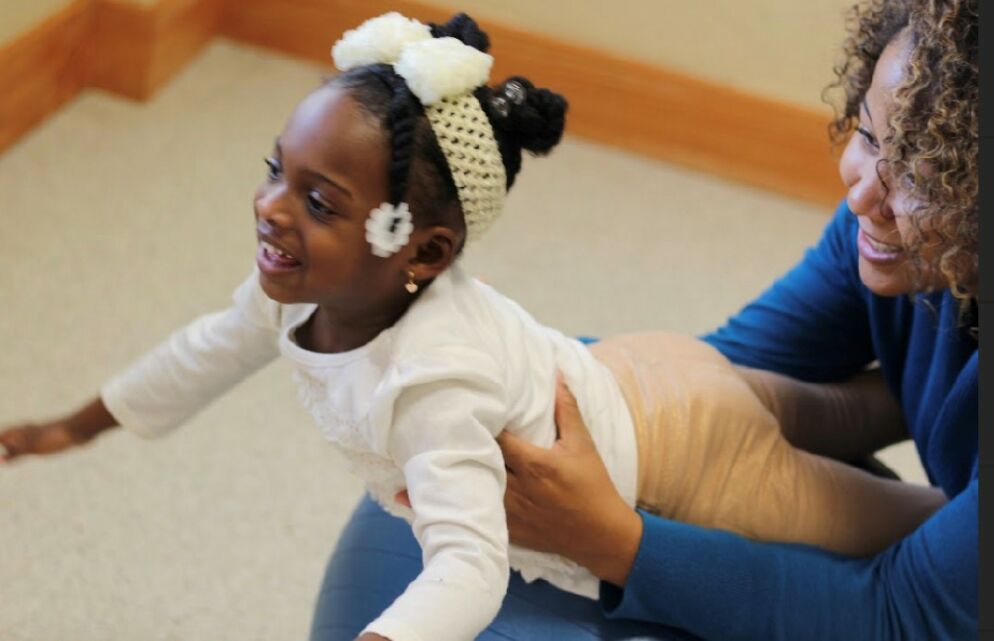
Lauren Villa is a pediatric occupational therapist at Express Yourself Therapy, in Kensington, Maryland. She primarily works with children who have sensory differences, diagnoses or developmental disorders that impact their ability to participate in play in a “meaningful way.”
Villa is currently operating a nature-based occupational therapy program at Freetown Farm in Columbia, Maryland. So far, she has found that the outdoor setting fosters a sense of well-being and self-efficacy in the children she supports—as well as many other benefits.
“It’s beautiful in that there’s change that comes so naturally. We as human beings are often hesitant to experience and accept change, but nature ebbs and flows,” Villa says.
“Everything we do outside—walking, reading, gardening—all those things we interact with like the sun and the temperature, it’s fulfilling,” she says. “It inspires that intrinsic motivation that we have, and I hope to foster that in the kids I work with as well.”

Villa began her nature-based summer program last year as part of her occupational therapist doctorate program. The program, running through Aug. 17, is for ages in middle school, high school and beyond and involves weekly two-hour group sessions to develop skills in executive functioning, motor learning and team building.
Executive functions, according to the United States Department of Health and Human Services, make it possible to play with ideas mentally, think before acting, meet new challenges, resist temptations and stay focused.
Villa’s own inspiration for the program stemmed from her childhood in Maine.
“Nature was really a place I could be with my thoughts and feel the most myself,” Villa says. “I wanted to bring the joy it brings me to others.”
In nature, Villa says the body experiences many things most of us aren’t consciously aware of, from the earthy scent of pine to the feeling of the breeze in our hair and the changes in the ground under our feet. These surroundings are helpful for the children Villa works with because for many of the kids, the goal of occupational therapy is to help them process multiple sensations at the same time.
Occupational therapy in general uses everyday life activities or “occupations” to improve a patient’s ability to accomplish their daily activities. For kids, this usually means playing, sitting or socializing, according to Varleisha Gibbs.
Gibbs is the vice president of diversity, equity, inclusion, justice and belonging at the American Occupational Therapy Association (AOTA). AOTA is a national professional association that represents the interests and concerns of occupational therapists. Gibbs has been a practicing occupational therapist for nearly 20 years.
Gibbs too was incredibly motivated by her experiences growing up. She received occupational therapy as a child. “I remember just truly enjoying my interaction,” Gibbs says.
Gibbs says nature-connected occupational therapy’s advantages lie partially in alleviating the challenges participants face in more structured environments.
“Artificial lighting and electronics affect the ability to maintain arousal for functioning and engaging with your environment,” Gibbs says.
Being in nature removes roadblocks for kids, especially those with sensory differences. For some children, the natural environment may be more efficient for helping them to reach their goals, but every child is unique in their challenges and needs.
According to Gibbs, children in a classroom may feel confined, and their schedules in school may not be aligned with their development.
“For children who receive occupational therapy services, our goal is to work with them. We’re not trying to “cure” or do behavioral methods that would significantly reshape who they are. Our goal is to do things that would be natural to them— and I believe our services are underutilized a lot,” Gibbs says.
To learn more about Villa’s program, contact lauren@expressyourselftherapy.com. Sessions are Thursdays from 10 a.m. to 11:45 a.m. (middle school) and 12:15 p.m. to 2 p.m. (high school +)
Explore other nature-based programs for families at communityecologyinstitute.org.