By Laura Shovan
When I visit schools in my work as a Maryland State Arts Council Artist-in-Education, I see the value of using poems to get students talking about their feelings. As my friend, middle grade verse novelist Chris Baron, says, “Poetry unlocks the door to the internal landscape.” In other words, reading and writing poems put us in touch with our thoughts and our feelings, supporting our social-emotional learning.
But what exactly is “social-emotional learning”? The Collaborative for Academic, Social, and Emotional Learning defines the term as “the process through which all young people and adults acquire and apply the knowledge, skills and attitudes to develop healthy identities, manage emotions and achieve personal and collective goals, feel and show empathy for others.”
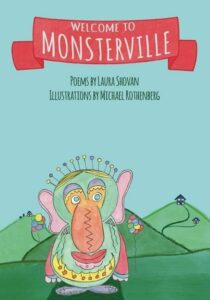
This is the aspect of poetry that I explored in my latest book for kids, “Welcome to Monsterville.” In this collection of poems, monsters are stand-ins for the big feelings children experience: delight and anger, empathy and grief.
Here are some of my favorite children’s poetry books for starting those social emotional conversations.
Read-to-Me Books
Although these books are wonderful read-alouds, children will continue to enjoy them as they begin to read independently.
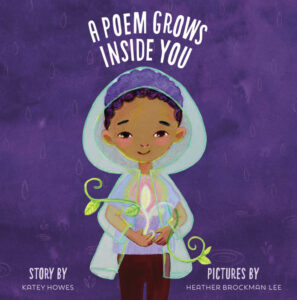
“A Poem Grows Inside You” by Katey Howes, illustrated by Heather Brockman Lee
This picture book explores writing and creativity as an emotional outlet. Howes’ rhyming verse follows a young poet from inspiration through his fear about sharing his creation to the joy of “letting the whole world meet / this poem you’ve been growing.”
For Elementary School Readers
These poetry books are packed with characters who are dealing with the joys and frustrations of being a kid.

“A Bad Case of the Giggles: Poems That Will Make You Laugh Out Loud” edited by Bruce Lansky, illustrated by Stephen Carpenter
Sometimes, when we’re feeling down, the best pick-me-up is a good belly laugh. Lansky’s anthology is filled with silly puns, burps and baby brothers. The poems remind readers that emotions can be funny, too.
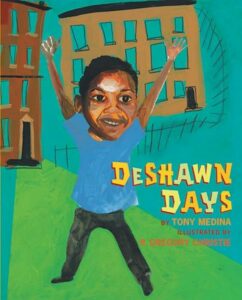
“DeShawn Days” by Tony Medina, illustrated by R. Gregory Christie
This slice-of-life book follows exuberant 10-year-old DeShawn and the extended family who shares his house. At its
center is DeShawn’s close relationship with his grandmother. When she dies, DeShawn moves through grief with the help of his mother and cousin.
Grades 6-8
There are few offerings with poems selected specifically for tweens. These two are excellent.

“Imperfect II, Poems about Perspective: An Anthology for Middle Schoolers” edited by Tabatha Yeatts
This collection covers a range of emotions, from the awkwardness of picture day and pimples to the frustration of arguing about homework. There are also lovely internal moments as older children turn to either the outdoors or the blank page as a way to reset and self-calm.
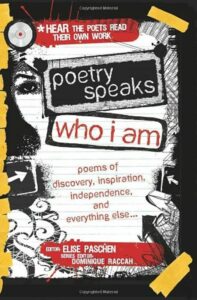
“Poetry Speaks Who I Am: Poems of Discovery, Inspiration, Independence, and Everything Else” edited by Elise Paschen
“Poetry Speaks Who I Am” combines classic poems such as Maya Angelou’s “Still I Rise,” Edgar Allan Poe’s “Annabelle Lee” and Shakespeare’s “Sonnet 130” with those from poets living and working today. The result is an affirmation that complex human emotions are nothing new. In fact, they connect us across cultures and through the centuries. T
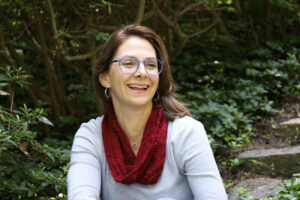
Laura Shovan is the award-winning author of “The Last Fifth Grade of Emerson Elementary” and other works. Purchase “Welcome to Monsterville,” (Apprentice House Press), illustrated by Michael Rothenberg, at laurashovan.com or order at Growing Minds Bookstore in Catonsville through bookshop.org.