

Baltimore City has long been saddled with vacant homes and a lack of affordable housing for low-income residents. But there are two ongoing community projects set to help address these needs and bring growth to the city.
The prospect of building up the community physically while also supporting its most important foundation, its people, led to revitalization efforts with help from students at the new Wells Fargo Trades Academy at faith-based nonprofit City of Refuge, located in the Brooklyn neighborhood of Baltimore.
Brooklyn is an industrial neighborhood in Southside Baltimore where nearly 40% of residents live below the poverty level, according to City of Refuge.
The academy comes as part of a $20 million investment to expand the nonprofit’s community impact through the construction of affordable homes by academy students from that community.
“Making homeownership more accessible and helping people learn trades translates into financial well-being, which we believe makes a lasting impact for people, families and neighborhoods here in Baltimore, says Wells Fargo Chief Executive Officer Charlie Scharf, who started his career in Baltimore, in a news release.
In addition to grants from both the city and state, academy funding included $500,000 from Wells Fargo.
Another housing redevelopment project in Baltimore looks to create 300 new townhomes, greenspace, commercial space, retail space and road infrastructure improvements on 8 acres of Madison Park North in West Baltimore and improve walkability on North Avenue.
Situated between Baltimore’s historic Reservoir Hill and Bolton Hill neighborhoods, the Reservoir Square project is within a 15-minute walk of attractions including Mobtown Ballroom and Graffiti Alley around Charles North, which is densely populated with
restaurants and businesses.
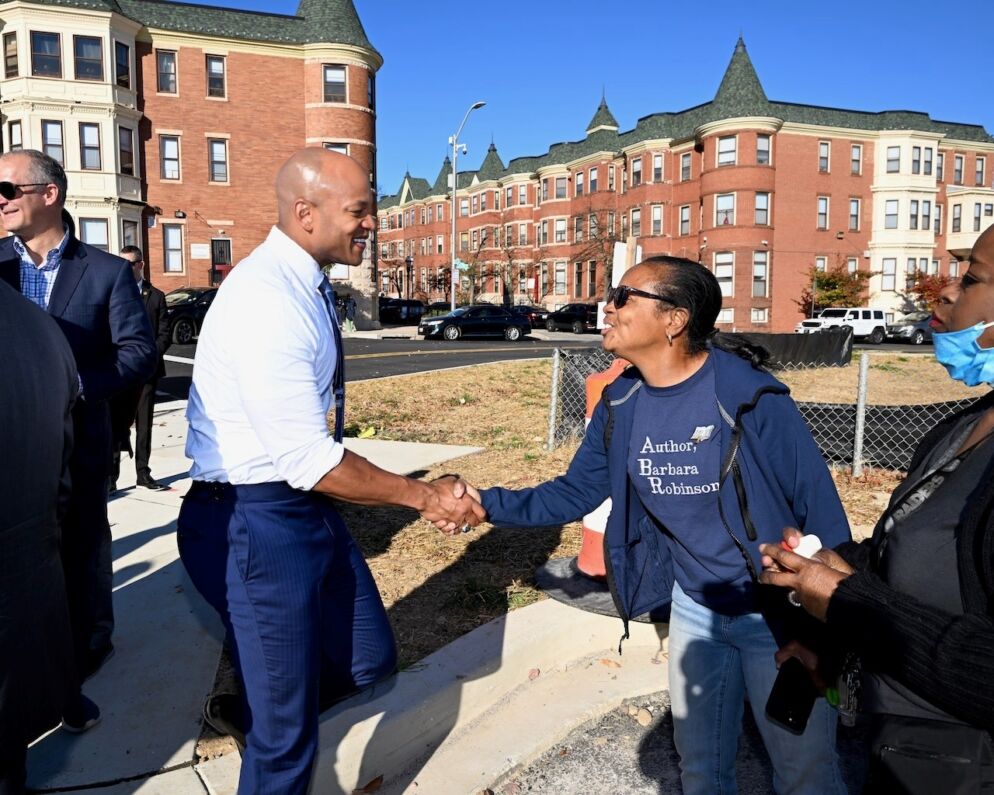
Maryland Governor Wes Moore says that the two projects will “lay paths to work, wages and wealth for future generations of Baltimoreans,” according to a news release.
The multi-year project had received a little over half of its $100 million cost as of November. The largest funder was the Maryland Economic Development Corporation, which gave $24 million in bond financing.
The first phase of the project, which includes market-rate townhomes, market and workforce apartments and, notably, access to fresh groceries, is expected to wrap up in 2025.
Construction of office buildings would also begin this year, with grocery completion by 2026. The retail and multi-family residential phase does not yet have a completion date



