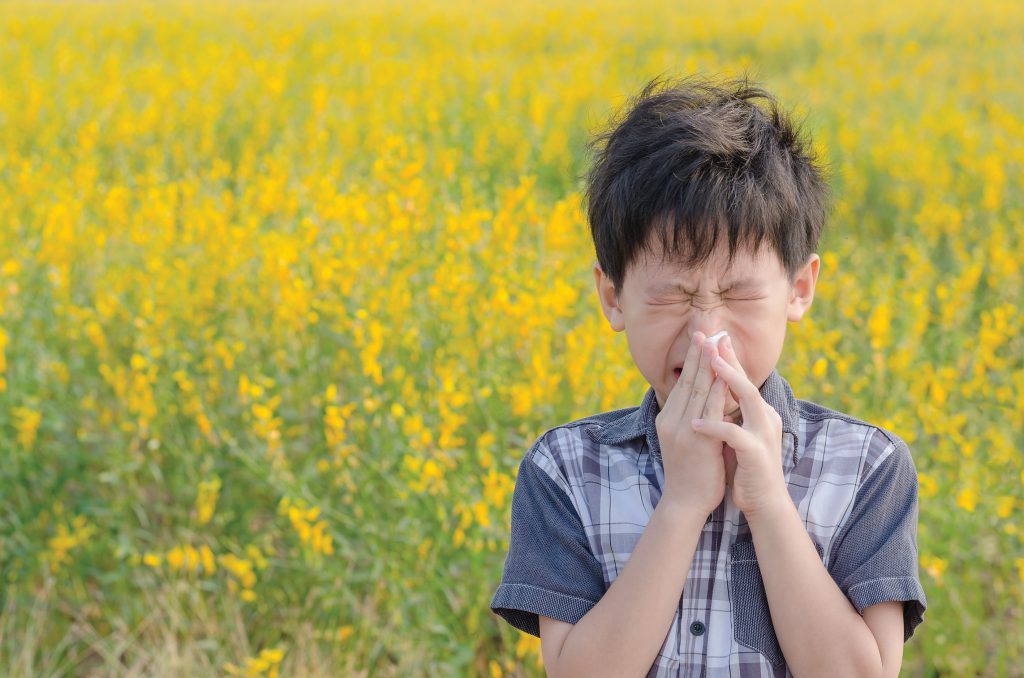
Spring is a time of joy, getting back outdoors and growing with the world—for most people. For seasonal allergy sufferers, it’s time to stock the medicine cabinet and pull up the pollen counts.
But allergies don’t just affect adults. About 18.9% of children have a seasonal allergy, according to the Centers for Disease Control and Prevention (CDC). That’s nearly 1 in every 5 children.
We interviewed Dr. Robert Wood, the director and attending physician of the Pediatric Allergy Clinics at The Johns Hopkins Hospital, to find out what parents can do make this allergy season a breeze.
What are seasonal allergies?
Seasonal allergies are those allergies that are primarily related to outdoor allergens—trees, grasses and weeds. An allergy in general is a body’s abnormal response to a substance that would normally not bother a non-allergic person.
To break [the most common seasonal allergies] down, there’s a tree pollen season that comes first that starts the last week of February—sometimes a little bit later depending on the temperatures outside. The tree pollen season will gradually increase through March. Then, it really explodes in April. In May, one comes out, and that lasts somewhere into June or July depending on climate and rainfall. There’s also some summertime weeds but the summertime is usually pretty much a break for seasonal allergies, and then ragweed shows up in the middle of August and lasts through September and October.
How can parents minimize the impact of these allergens at home?
There are only a few things to do, and it’s keeping your window shut and not being tempted even on a nice spring day to open your windows.
Otherwise, there are some personal things that we recommend for the child… after coming in from being outdoors, [which] is to take a damp washcloth and wipe off the face, especially around the eyes. Wipe off the hair, and then have a full shower with the hair being washed at night so they don’t go to bed with pollen in their hair.
When do seasonal allergies warrant a visit to the pediatrician?
These days, it’s usually when the typical over-the-counter medicines are not helping. It used to be not that long ago that they were all prescription medicines, so to get any real relief you had to see your pediatrician, but now we think it’s perfectly appropriate for families to use the kind of typical allergy medicines that are available over the counter. Those include three categories—one of those is antihistamines, the second are nasal sprays and the third are eye drops.
When they need to see a pediatrician, it’s either because those are just not working at the usual doses, or if there’s a concern that it’s not just an allergy and it may be an infection or something else that may mimic allergies but might warrant a visit to sort out, whether it’s really an allergy or some sort of infection.
When should parents medicate for an allergy? Is there any merit to “toughing it out” without medication?
It really depends on, you know, all treatment of seasonal allergies is based on comfort. If a child is uncomfortable or you’re finding that [you’ve] limited their outdoor time, you know, when we think they really should be outdoors, then we strongly encourage medication because we’re very lucky to have very safe, very effective medicines that will make the child’s life more or less normal even during the worst of the season.
These responses have been edited for length and clarity.
Parents can keep tabs on allergens and plan ahead by checking pollen counts online at aaaai.org and pollen.com.