At Irvine Nature Center, the most magical time of the year is mid-to-late February—it’s Maryland’s sap season! And the center regularly takes advantage of sap season by holding its annual Maple Magic event, giving Baltimore area residents an opportunity to try their hand at tapping trees and learn about the process of making maple syrup.
While the nature center does not produce or sell its own maple syrup, Maple Magic has been one of its signature programs for more than 40 years. Participants in this “hike-’n-learn” event go on a nature walk around the Irvine campus, locating and tapping red maple, tulip poplar and black walnut trees using a variety of different methods. They also watch naturalists convert the sap into maple syrup and get to taste the difference between cheap, supermarket-quality syrup and pure maple syrup.
“I think it’s a subject matter that so many people have curiosity about,” explains Kristen Cooper, director of marketing and communications at Irvine Nature Center. “Whether it’s with us or with one of the other institutions in the region, I think people are really excited to do something unique in the winter. Finding out how something in nature turns into something that lands on your table is pretty cool.”
One thing that sets Irvine Nature Center’s approach to tree tapping and maple sugaring apart is that its program has a historical aspect and partially focuses on the Indigenous history of the practice. Maple sugaring was popular among Native American tribes long before settlers arrived from Europe, with Irvine Nature Center’s program focusing primarily on the Abenaki people.
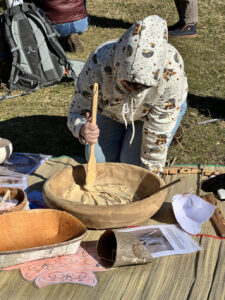
“People usually think of lumberjacks when they think of maple syrup … but the first people in Maryland were using sumac spiles to tap trees,” says Brittany Roger, one of the nature center’s environmental educators. “The first activity that people do when they actually start sugaring [at Maple Magic] is learning how the Abenaki people reduced sap using a three-clay-pot system. Then, we go into the science and how the practice has changed over generations.”
Indigenous people would actually form sap into blocks of sugar instead of reducing it to syrup because it was easier to store as a solid. Maple syrup was a modification to the process made by settlers, who had glass and metal vessels to store liquid in.
Maple Magic is one of Irvine Nature Center’s most popular events, regularly attracting families with children, field trip groups and even solo adult visitors. This is in part because of the event’s accessibility, but also because tree-tapping and maple sugaring is not as common of a tradition in Maryland as it is in more northern states. Notably, Irvine Nature Center does not have any sugar maples, which are usually tapped for syrup, because they struggle to grow in Maryland’s warmer climate.
“In the more northern states, people have sugar maples right in their backyards, and a lot of people tap their own trees and reduce their own sap into syrup,” Roger says. “But in Maryland, we don’t really get to do that. For a lot of people, this is their one opportunity to learn what it’s like to do, hands-on.”
For 2025, Maple Magic sessions take place on Feb. 15, Feb. 23 and March 1, though the final event is exclusively for Irvine members and includes a free pancake breakfast. For more information, visit explorenature.org.